

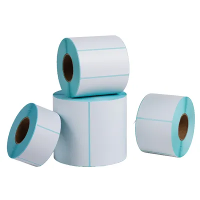
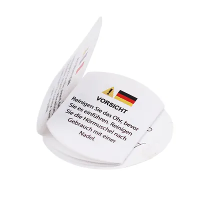
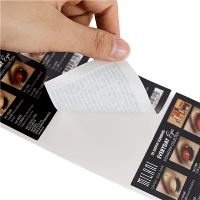
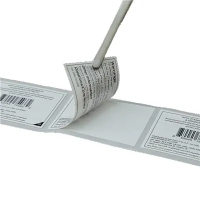
Self-adhesive labels, also known as pressure-sensitive labels, are composite materials made of paper, film, or special materials as the face layer, coated with adhesive on the back, and laminated with silicone backing paper. They are characterized by being glue-free, pollution-free, and quick to apply. Their structure consists of three parts: the face material, the adhesive, and the backing paper. The face material includes types such as offset paper, coated paper, PET, and PVC; the adhesive is classified into super-adhesive and strong-adhesive types; and the backing paper uses release materials such as glassine paper and kraft paper. Finished labels are produced through printing, die-cutting, and other processing techniques. Self-adhesive materials were first used in the United States in the 1930s.
In 1964, a chemist at 3M formulated an adhesive with high viscosity but slow curing. In 1973, the company developed label paper based on this. In China, self-adhesive label printing technology was introduced from abroad in the late 1970s. In recent years, the industry has continued to develop in terms of materials and technology; for example, in 2023, some companies developed thermosetting, backing-free, thermally sensitive self-adhesive labels. In 2024, a company obtained a patent for "an environmentally friendly self-adhesive label with anti-counterfeiting and anti-theft features." On October 1st of the same year, the machinery industry standard "Self-adhesive Label Printing Machine" and the chemical industry standard "General-purpose Pressure-sensitive Adhesive Labels" officially came into effect. Currently, the self-adhesive label industry is developing towards intelligence, greening, and functionality. Smart labels (such as those integrating RFID and NFC technologies), environmentally friendly materials (such as bio-based biodegradable materials and solvent-free adhesives), and multi-functional labels (such as anti-counterfeiting traceability and sensing functions) are becoming important trends.