

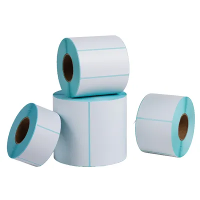
Self-adhesive labels are broadly categorized into two types based on their substrate: paper and film. Paper substrates include offset paper, coated paper, mirror-coated paper, aluminum foil paper, laser holographic film, fragile paper, and thermal paper. Film substrates commonly use synthetic materials such as PE (polyethylene), PP (polypropylene), PVC (polyvinyl chloride), and PET (polyester). Industry trends are driving continuous material innovation, with environmentally friendly and functional materials becoming key areas of focus. This mainly includes environmentally friendly materials, such as bio-based biodegradable materials, solvent-free adhesives, and the increasing application of water-based environmentally friendly inks. It also includes smart/functional materials, such as electronic tags integrating RFID/NFC technology for traceability and data interaction; tags with temperature and humidity sensing functions; specialized anti-counterfeiting labels using VOID anti-counterfeiting and temperature-sensitive ink technologies; and electronic ink labels.
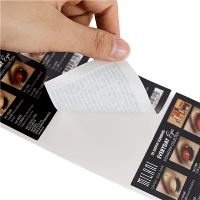
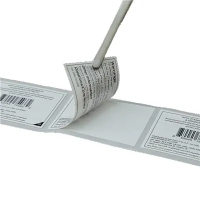
Post-processing of self-adhesive labels includes hot stamping, varnishing, and lamination. Among lamination processes, paperless composite film lamination is currently the most widely used lamination material. Under this trend, backing paper-free technology has been developed. For example, thermosetting backing paper-free thermal self-adhesive labels have been successfully developed and have reached mass production standards. This product does not require glassine release paper and uses a thermosetting silicone oil release layer, which has the characteristics of being environmentally friendly, low-carbon, and low-cost.