

Design Finalization
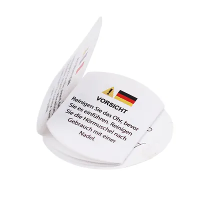
Determine the label shape (rectangular, circular, etc.) and folding method (double fold, triple fold, accordion fold, etc.).
Leave a gap for retraction (e.g., 0.5–1mm at the tab) to avoid difficulty in opening and closing after folding.
Set the CMYK color mode, resolution ≥300dpi, and mark the crease lines and die-cut lines.
Material Preparation
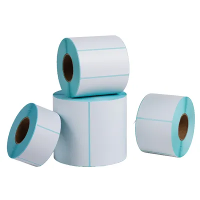
The face paper is commonly 250–450g gray coated paper, single coated paper, or specialty paper; the substrate can be flexible materials such as paper, PET, and PP.
If RFID functionality is included, a flexible antenna (e.g., conductive ink printing) and a chip need to be integrated.
Printing Processing
Use a rotary printing press or offset printing press to simultaneously print multiple layers of material.
Control the registration error to ≤0.1mm, and use an appropriate amount of ink to prevent ink bleeding and smudging. Die-cutting and Creasing
The die-cutting machine cuts the outline, and the creasing machine presses the fold lines (crease depth approximately 1/3 of the paper thickness).
For multi-layer labels, all layers must be die-cut simultaneously to ensure alignment.
Folding and Shaping
Fold manually or mechanically along the crease lines, testing the smoothness of opening and closing.
Accordion fold labels need to be folded layer by layer, resembling an "accordion".