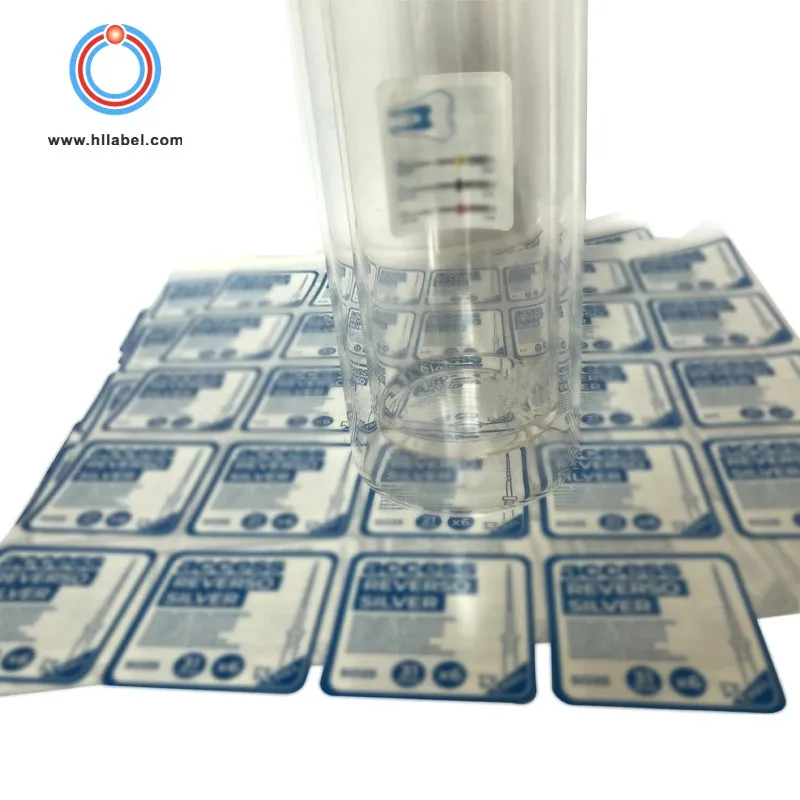

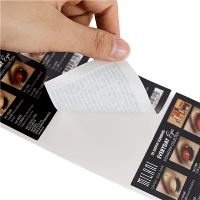
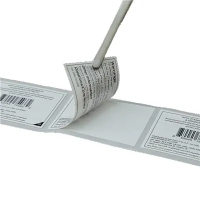
Technical Principles and Core Components: Transparent self-adhesive labels consist of a three-layer structure: the outer layer is a transparent PET or PVC film, providing abrasion-resistant and waterproof physical protection; the middle layer is a water-based adhesive or acrylic adhesive, with different adhesion requirements achieved by adjusting the adhesive formula; the bottom layer is glassine or release paper, facilitating label peeling and mass production. Its waterproof and oil-resistant properties stem from the chemical stability of the surface materials, while the UV printing process cures the ink with ultraviolet light, forming a scratch-resistant and fade-resistant protective layer on the label surface.
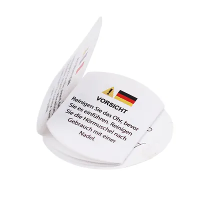
Application Scenarios and Customization Flexibility: This type of label is suitable for fields with high cleanliness requirements, such as food packaging, electronic product labeling, and medical device classification. Its shape supports rectangular, circular, and irregular designs, and the size can be customized according to specific needs such as business cards, bottles, and equipment. For example, medical device labels need to include instructions for use and warnings, which can be achieved by custom-shaped labels that fit the device surface; food packaging labels must meet hygiene standards, and transparent materials can avoid obscuring the product's appearance.
Technical Highlights and Practical Performance: Compared to ordinary paper labels, transparent self-adhesive labels offer significantly improved water and oil resistance, resisting condensation and oil stains, thus extending the label's lifespan. The water-based adhesive process uses multi-layer coating technology to balance initial and long-term tack, preventing labels from peeling off or leaving adhesive residue. The UV printing curing process requires no solvent evaporation, and the ink has strong adhesion and is highly environmentally friendly, making it suitable for applications requiring long-term exposure to light or humidity.